How Initial D Changed JDM Culture Forever
JDM NINJA · 6/30/2026
A manga about an ageing Toyota Corolla on Japanese mountain roads introduced an entire generation worldwide to JDM cars and drift culture. Here's the real-world impact, two decades later.
A Manga That Changed Real Car Culture
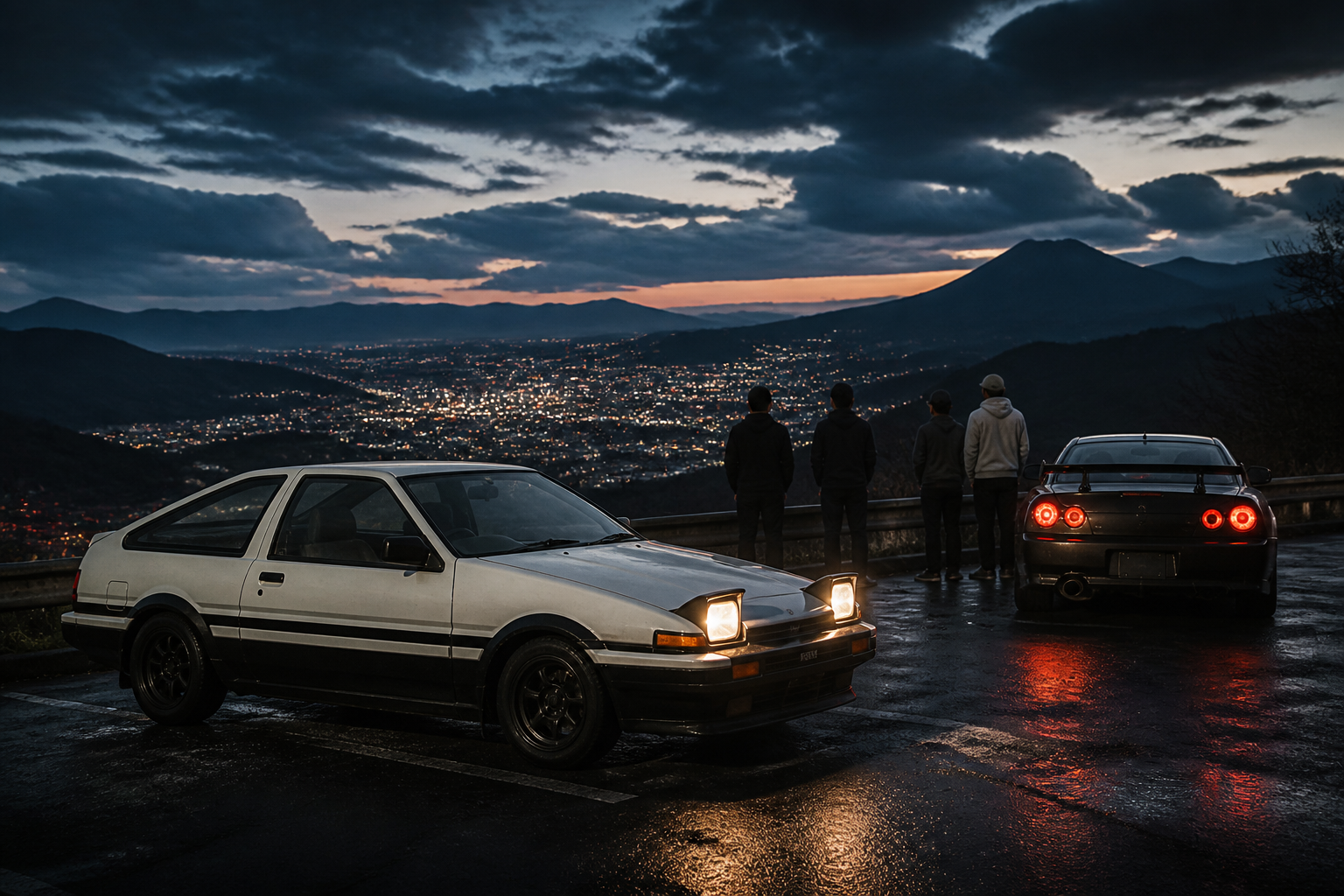
Initial D started as a manga about an ageing Toyota Corolla on Japanese mountain roads, but its influence spread far beyond fiction. It introduced a global audience to touge driving, drifting, Japanese tuning shops and cars that had previously been niche outside enthusiast circles. For many people, it was the first time an AE86, FD RX-7 or FC RX-7 felt like a character rather than just a specification sheet.
The series did not create JDM culture by itself. Japan already had drifting, street racing, circuit tuning and a deep used-car scene. What Initial D did was package that world in a way that was emotional, understandable and exportable.
The AE86 Effect
No car benefited more than the Toyota AE86. Before Initial D, it was a lightweight, rear-drive Corolla valued by drivers who understood balance and simplicity. After the series became global, the panda Trueno became a symbol. Demand rose, values climbed and clean cars became much harder to find.
The irony is that the AE86's real appeal matches the story. It is not powerful. It rewards momentum, commitment and mechanical sympathy. That made it a perfect hero car because the driver mattered as much as the machine. The downside is that many buyers now pay legend money for cars that still need old-car inspection: rust, tired drivetrains and missing trim remain real issues.
Drift Culture Goes Global
Initial D helped make drifting understandable to people who had never seen a Japanese mountain road. It showed weight transfer, line choice, throttle control and the emotional rhythm of chasing another car downhill. When drifting later became a professional global motorsport, many fans already had a vocabulary for it because of the series.
Cars like the Silvia, 180SX, RX-7, Skyline and MR2 gained cultural weight. They were no longer just imports; they were part of a shared visual language. Pop-up headlights, Watanabe-style wheels, tofu-shop graphics and Eurobeat became shorthand for a whole era.
What the Series Got Right
Initial D understood that car culture is not only about maximum horsepower. It showed different philosophies: rotary precision, turbo grip, lightweight balance, all-wheel-drive confidence and driver development. The rival cars often represented different approaches rather than simple good-versus-bad matchups.
That is why the series still works for enthusiasts. A battle between an AE86 and an RX-7 is also a conversation about momentum versus power, simplicity versus technology and confidence versus fear.
What Buyers Should Remember
Cultural importance can inflate prices. Initial D-associated cars are often more expensive than mechanically similar alternatives because buyers want the story. That does not make them bad purchases, but it does mean condition matters even more. Do not buy a rusty AE86 or abused FC RX-7 just because it matches a poster.
The best lesson from Initial D is not that one hero car is magic. It is that learning a car deeply matters. If the series inspires you to buy a JDM classic, choose one you can maintain, drive and understand — not just one that looks good in screenshots.
About the author
JDM NINJA
JDM NINJA is written and edited by Lucas Tougaard, a Denmark-based importer and owner of Japanese-market performance cars since 2019. Every guide is researched in-house from auction results, factory documentation and hands-on ownership — read how we source and verify our data in our editorial standards, or send a correction.
Published 6/30/2026 · Updated 9/7/2026