How to Read a Japanese Vehicle Inspection Certificate (Shaken)
JDM NINJA · 6/30/2026
Every car in Japan must pass a rigorous biennial inspection called shaken. Understanding what the shaken certificate tells you is one of the most useful skills any JDM buyer can develop before purchasing.
What Is Shaken?
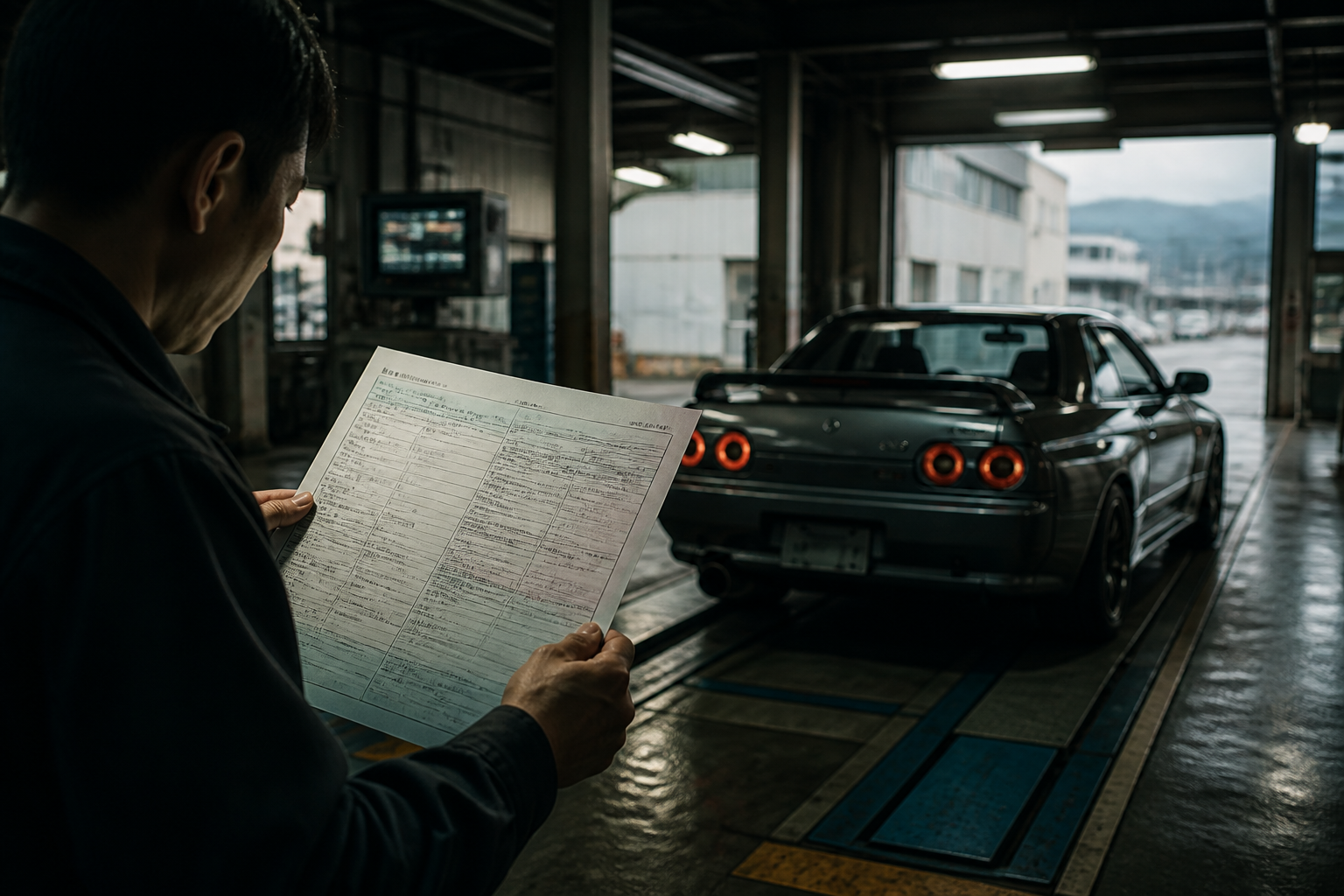
Shaken (車検, pronounced "sha-ken") is Japan's mandatory vehicle roadworthiness inspection system. Unlike many European MOT-style tests that are primarily pass/fail checks of safety items, shaken is a comprehensive certification process that covers structural integrity, emissions compliance, lighting standards, brake performance, and dozens of individual mechanical checks. The system is administered by the Japanese government through approved inspection stations.
New cars in Japan require a shaken inspection after three years, and every two years thereafter. The cost of a full shaken — including any repairs required to pass — is shared between the owner and an approved workshop. Japanese owners typically sell or scrap cars when shaken becomes expensive, which is part of why Japan produces such a large supply of well-maintained used cars.
Why Shaken Matters for Import Buyers
When you import a Japanese car, the shaken certificate tells you when the car was last inspected and whether it passed without issues. A car with a valid shaken certificate has been checked against Japanese roadworthiness standards — which are strict and well-enforced — within the last two years. This is a meaningful quality indicator that has no direct equivalent in the used car market of most other countries.
Japanese auction houses require a valid shaken for a car to achieve its full grade. Expired shaken doesn't mean a car is unroadworthy, but it means its compliance with the standard hasn't been recently verified. Price your purchase accordingly.
Reading the Certificate: Key Fields
車名 (Shamen) — Vehicle Name/Make: The manufacturer's name in Japanese characters. For a Nissan Skyline GT-R, this would read ニッサン (Nissan).
型式 (Katashiki) — Model Type Code: Japan's internal model designation, which is more specific than the marketing name. The R34 GT-R is coded BNR34. This code is used in all official Japanese documents and confirms the exact specification of the car.
車台番号 (Shudai Bangō) — Chassis Number: Equivalent to the VIN. This must match the chassis plate on the car itself. Any discrepancy is a serious warning sign requiring immediate investigation.
初度登録年月 (Shodo Tōroku Nengetsu) — First Registration Year and Month: The date the car was first registered in Japan. This confirms the car's age independently of any mileage claim.
有効期間の満了する日 (Yūkō Kikan no Manzō Suru Hi) — Inspection Expiry Date: The date the current shaken expires. This is one of the most practically important fields. If the date is in the future, the car has current certification. If it has expired, the car will need inspection (either in Japan before export, or in the destination country upon arrival).
原動機の型式 (Gendōki no Katashiki) — Engine Type: Confirms the engine designation. For a Skyline GT-R this should read RB26DETT. Verify this against your purchase specification.
乗車定員 (Jōsha Teiin) — Passenger Capacity: The number of seats the car is certified for.
車両重量 (Sharyō Jūryō) — Vehicle Weight: The kerb weight as certified. Variations from the published manufacturer specification may indicate significant modifications.
Red Flags to Watch For
Any correction, alteration, or rubber stamp over a field on the original document should be investigated. Official corrections are made by the inspecting authority and should include a stamp — any unofficial-looking alteration is a reason to pause. A chassis number on the certificate that doesn't match the car physically is a dealbreaker regardless of any explanation offered.
For performance cars, cross-reference the engine type on the shaken against the actual engine in the car. Engine swaps are common in the JDM world and are not necessarily problematic, but they must be fully disclosed, legally registered, and accurately reflected on the car's official documentation.
About the author
JDM NINJA
JDM NINJA is written and edited by Lucas Tougaard, a Denmark-based importer and owner of Japanese-market performance cars since 2019. Every guide is researched in-house from auction results, factory documentation and hands-on ownership — read how we source and verify our data in our editorial standards, or send a correction.
Published 6/30/2026 · Updated 9/7/2026