Understanding the Japanese Auction Grading System
JDM NINJA · 6/30/2026
Every JDM import comes with an auction sheet that grades its condition on a scale most buyers never learn to read properly. Here's exactly what every grade, sub-grade, and symbol actually means.
The Most Important Document You'll Ever Read Before Buying
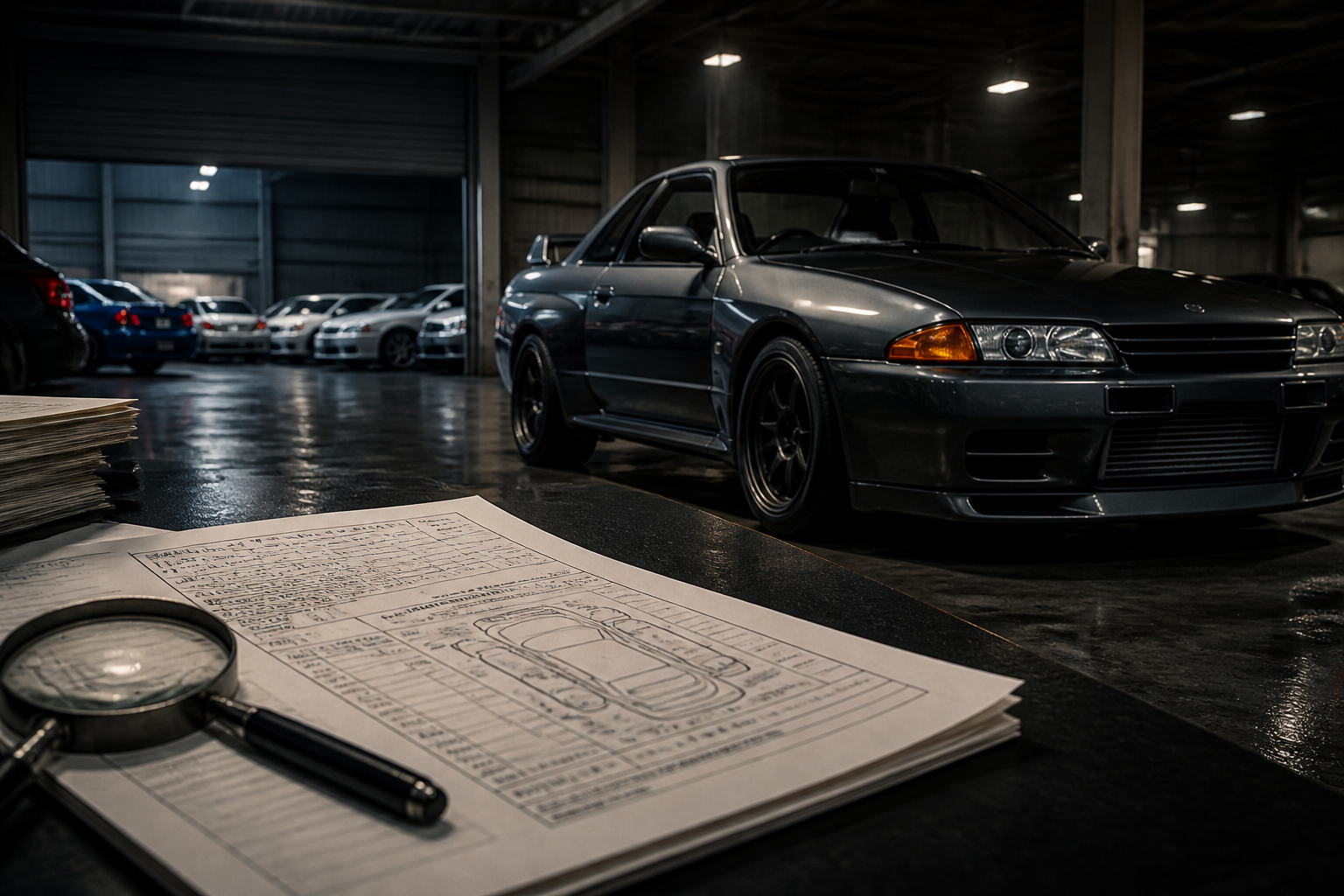
Every car sold through a Japanese auction house comes with an inspection sheet that grades the vehicle's condition using a standardised system understood across the industry. Learning to read it properly — rather than relying only on a translated summary — is one of the most useful skills any prospective JDM buyer can develop.
The sheet is not a guarantee that the car is perfect. It is a snapshot created by an auction inspector on the day of sale. Used correctly, it tells you where to ask follow-up questions, what photos to request, and when to walk away before shipping a problem across the world.
The Overall Condition Grade
Japanese auction houses use a numerical scale, usually 1 to 6, with half-point increments. The exact wording can vary by auction group, but the practical meaning is broadly similar:
- Grade 6: effectively new or unregistered, extremely rare on older performance cars.
- Grade 5: excellent condition, usually very low mileage and minimal wear.
- Grade 4.5: very clean used car with minor age-related marks.
- Grade 4: the normal target grade for many 1990s and 2000s JDM imports.
- Grade 3.5: usable but with visible wear, repairs or higher mileage.
- Grade 3 or below: inspect carefully; this is where the risk of deferred maintenance rises.
- Grade R or RA: repaired accident history. The repair may be minor or major, so the diagram and notes matter.
For enthusiast cars, a Grade 4 is often more realistic than a Grade 5. A 30-year-old Skyline, RX-7 or Silvia with a high grade should be questioned, not blindly trusted. Low mileage, repainting and missing history can all distort the headline number.
Interior and Exterior Sub-Grades
Most sheets include separate interior and exterior grades, usually A to E. A car can be Grade 4 overall but have a C interior, meaning the body may be presentable while the cabin has heavy wear, stains or missing trim. On rare cars, interior condition matters because replacement seats, door cards and dashboards can cost more than mechanical service parts.
Exterior grades also need context. A C exterior on a drift-chassis Silvia can be normal. The same grade on a collector NSX-R or low-mile R34 GT-R would need much more explanation.
Reading the Damage Diagram
The diagram is where the real story appears. Common marks include scratches, dents, waves, paint marks, corrosion, repaired panels and replaced panels. A small mark on a bumper is very different from a repair mark across a rear quarter or chassis area.
Ask your importer to translate every symbol, not just the headline grade. If the sheet mentions corrosion, core support repair, floor damage, frame repair or engine smoke, request extra photos before bidding. For cars with known rust issues, such as S-chassis Nissans or older Skylines, underside photos are not optional.
Mileage Verification
The odometer reading is listed with notes when the inspector believes it is genuine, changed or unknown. Japan's maintenance culture makes mileage fraud less common than in some markets, but it still happens. Cross-check the reading against shaken paperwork, service stickers, seat wear, pedal wear, steering-wheel shine and timing-belt labels.
A low-mile car with worn interior parts should raise questions. A higher-mile car with clear records and honest condition can be a better buy than a suspicious low-mile example.
What the Grade Does Not Tell You
Auction grading focuses on visible and basic mechanical condition. It does not fully evaluate compression, turbo health, rotary apex seals, gearbox synchros, old wiring, suspension geometry or whether a tuned car was mapped properly. A Grade 4 FD RX-7 can still need an engine rebuild; a Grade R Civic can be mechanically excellent after a small repaired bump.
Use the sheet as a filter, then build a fuller picture with translation, photos, service records and platform-specific checks. The best buyers do not chase the highest grade blindly. They match the sheet to the car's age, known weak points and intended use.
Practical Buying Checklist
- Get a full translation of the notes and diagram before bidding.
- Request underside, engine bay and interior photos for any older performance car.
- Question any old car with unusually low mileage and no paperwork trail.
- Treat repaired-history cars individually: some are good buys, some are not.
- Budget for service work after arrival, even if the auction grade is strong.
Once you can read an auction sheet properly, you stop shopping from excitement alone. That is the difference between importing a car you enjoy and importing someone else's hidden problem.
About the author
JDM NINJA
JDM NINJA is written and edited by Lucas Tougaard, a Denmark-based importer and owner of Japanese-market performance cars since 2019. Every guide is researched in-house from auction results, factory documentation and hands-on ownership — read how we source and verify our data in our editorial standards, or send a correction.
Published 6/30/2026 · Updated 9/7/2026