Nissan 180SX vs 240SX: Are They the Same Car?
JDM NINJA · 6/30/2026
They share a chassis code and a factory, but the 180SX and 240SX are not the same car under the skin. Here's exactly what separates the JDM original from its American export cousin.
Two Names, One Platform — But Not the Same Car
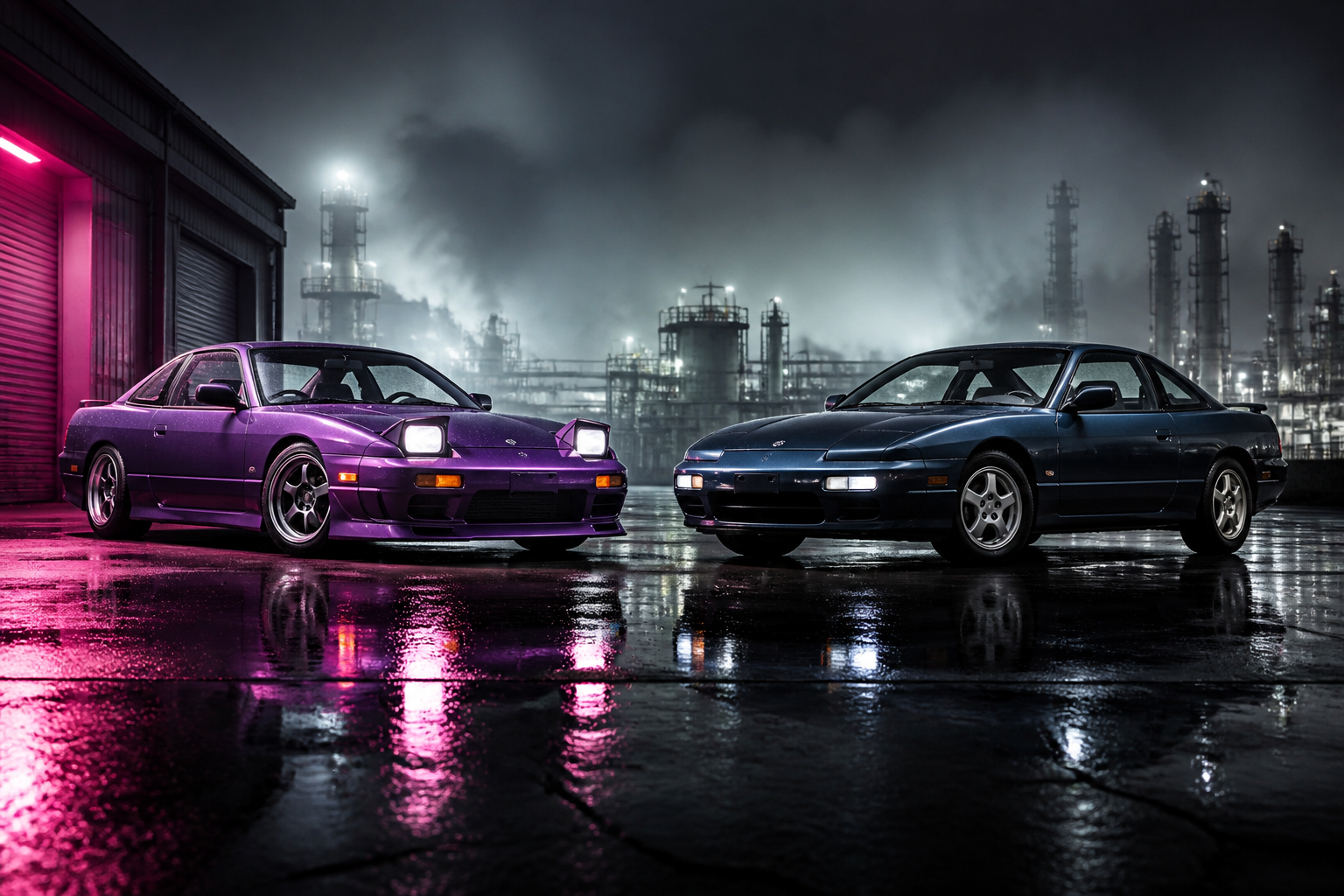
The Nissan 180SX and 240SX are often spoken about as if they are interchangeable. They share the S13 platform, similar proportions and a huge aftermarket, but they were sold in different markets with different engines, equipment and identities. Those differences matter when you are buying, importing or comparing values.
The simplest explanation is this: the 180SX is the Japanese-market hatchback, while the 240SX is the North American-market relative. They look related because they are, but the engine and market context create very different ownership stories.
Engine Differences
The main technical difference is the engine. Japanese 180SX models used turbocharged four-cylinder engines: early cars had the CA18DET, while later and more desirable versions used the SR20DET. These engines fit the car's lightweight rear-drive character and are central to the 180SX's appeal.
The 240SX used naturally aspirated KA-series engines, first the KA24E single-cam and later the KA24DE twin-cam. The KA has more displacement and decent torque, but it was not marketed as a turbo performance engine. In standard form, a 240SX is usually slower than an SR20DET 180SX, though turbo KA builds can be strong when done properly.
Body and Trim
Both cars use the hatchback shape in many comparisons, but details vary by year and market. The 180SX Type X is especially desirable because of its later aero, rear lights and trim. North American 240SX cars had different bumpers, lighting details and equipment. Many have been converted with Japanese parts, so buyers should verify what is original and what has been swapped.
Interior condition is also market dependent. Japanese cars may have different seats, climate controls and trim options. North American cars can be easier to register locally but often have long histories of budget drift use.
Buying and Importing
If you are in Europe, both cars may be imports, but the source market changes the paperwork and condition expectations. A genuine 180SX may carry better JDM desirability, especially if it is a later SR20DET Type X. A 240SX can be appealing if it is already local, rust-free and priced realistically.
Rust and crash damage matter more than badge. S13 chassis rails, sills, strut towers and rear arches must be inspected carefully. Many cars have been lowered, welded, caged, drifted or repaired. A clean KA-powered 240SX can be a better buy than a rusty SR-powered 180SX if your goal is a usable project.
Which One Is Worth More?
In most markets, genuine late 180SX examples are more desirable because they combine JDM identity with turbo power. Type X cars sit at the top of the normal range. However, values depend heavily on shell condition, originality and documentation. Engine swaps, repainting and drift modifications can either help or hurt depending on quality.
The 240SX remains important because it made the S13 platform accessible to a huge North American audience. It is not inferior, but it is different. Buyers should stop asking which name is better and start asking which individual car has the better shell, better history and better setup.
About the author
JDM NINJA
JDM NINJA is written and edited by Lucas Tougaard, a Denmark-based importer and owner of Japanese-market performance cars since 2019. Every guide is researched in-house from auction results, factory documentation and hands-on ownership — read how we source and verify our data in our editorial standards, or send a correction.
Published 6/30/2026 · Updated 9/7/2026