Nissan Skyline GT-R R34: Complete Buyer's Guide
JDM NINJA · 6/30/2026
The R34 GT-R is the most desirable JDM car ever made. Before you buy one, here's everything you need to know about variants, what to look for, common problems, and what to expect to pay.
Why the R34 GT-R Is Still the King
When Nissan launched the R34 GT-R in 1999, it was already the culmination of three generations of engineering development that had begun with the legendary R32 in 1989. The R34 refined everything the R32 and R33 had established: sharper steering, a shorter wheelbase for quicker responses, a more advanced version of the ATTESA E-TS Pro all-wheel drive system, and a multifunction display in the dashboard that gave real-time data on drivetrain status, boost pressure, and G-forces. Nothing else on the road in 1999 offered that.
Variants You Need to Know
Not all R34 GT-Rs are equal, and the variant significantly affects both driving experience and value:
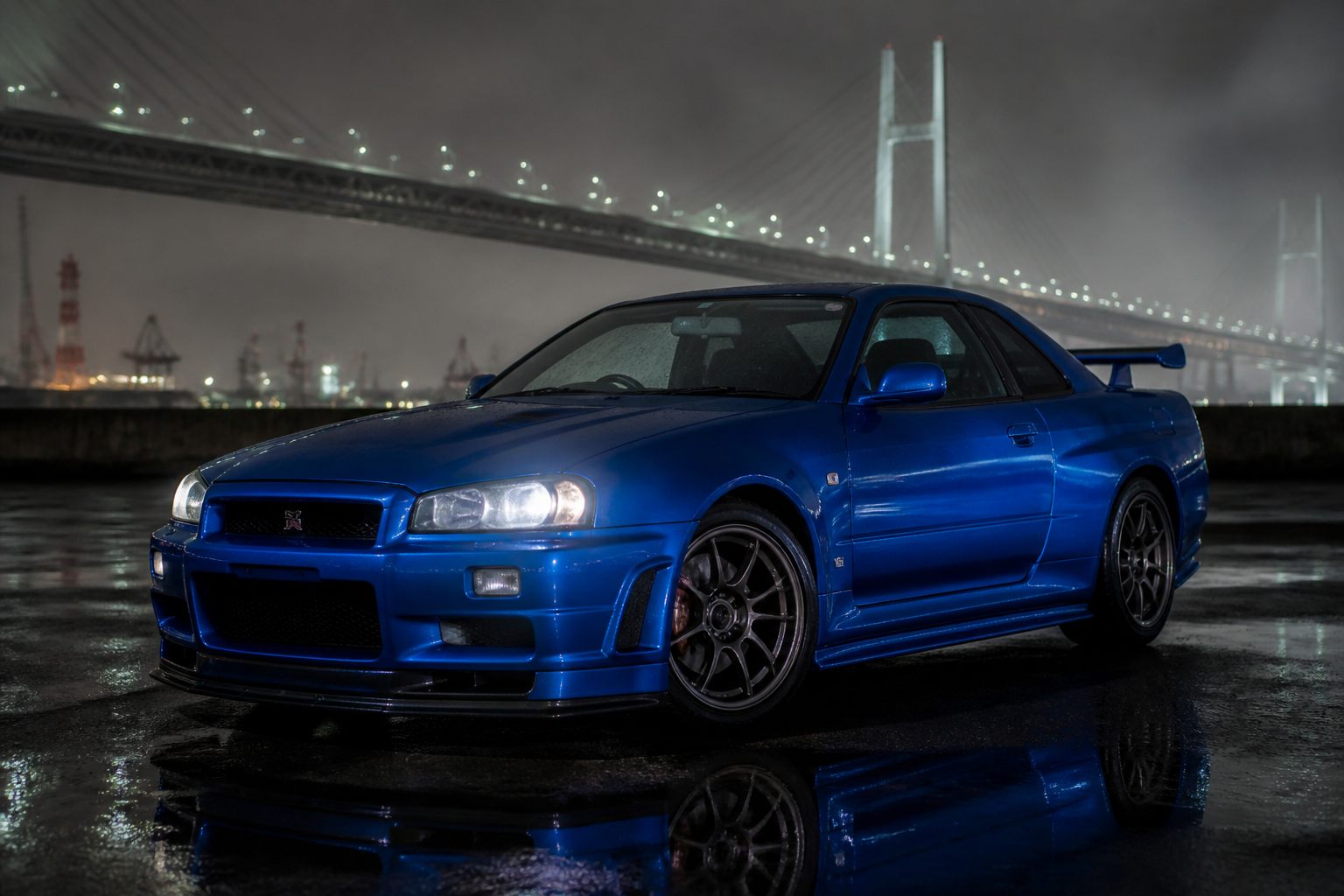
GT-R Standard — The baseline variant. Still exceptional, with the RB26DETT producing the factory-stated 280 horsepower (real output is consistently measured closer to 320–330 horsepower). Standard Brembo brakes, RAYS alloy wheels, and the full ATTESA E-TS Pro AWD system.
V-Spec — Added an active rear LSD (VLSD), larger brakes, and stiffer suspension tuning. The V-Spec is the driver's choice for circuit use.
V-Spec II — A mid-cycle refresh of the V-Spec with revised front lip styling and further suspension refinement. Also received the carbon fibre bonnet as a cost option.
V-Spec II Nür — The rarest and most valuable production variant. Limited to 718 units, it received a special N1 race-spec engine rebuilt to tighter tolerances, improved cooling, and a revised suspension tune developed partly through Nürburgring testing. Values for good examples now regularly exceed €250,000.
M-Spec — The grand tourer variant. Softer suspension, leather interior, Bose audio, and no VLSD. Intended for comfort rather than track performance. Less valued by performance buyers but increasingly appreciated as a completer car.
The RB26DETT Engine: What to Check
The RB26DETT is a strong engine that responds well to tuning, but age and previous ownership quality matter enormously. At inspection, check for oil leaks around the head gasket and rocker cover — both are common on high-mileage engines. Ask for full service history and look specifically for evidence of timing belt changes at the recommended 60,000 km interval.
Turbos on original cars are now over 25 years old. Listen carefully for bearing noise at idle and check boost pressure. Many cars have already been fitted with uprated turbos; this isn't automatically a negative, but you want documentation of what was done and by whom.
Common Problems
Beyond the usual checks for any 25-year-old performance car, the R34 has a few model-specific items to inspect. The transfer case (the front output of the AWD system) can develop noise; replacement is expensive. Check that the ATTESA system engages cleanly during a test drive — you should feel it apportion torque to the front wheels under hard acceleration.
Electronics on the R34 are robust but the multifunction display can develop pixel failure. Replacement screens are available but not cheap. Check all warning lights cycle correctly when the ignition is turned on.
What to Expect to Pay
Standard GT-R examples in good condition currently start around €120,000, with clean low-mileage cars commanding €150,000–€180,000. V-Spec variants add €20,000–€40,000 over equivalent standard cars. V-Spec II Nür examples exceed €250,000 and can reach €400,000 for the very best examples with full documentation. Always factor in import duties, VAT, and registration tax if buying from Japan directly — the landed cost can be 50% higher than the auction price.
Final Buying Advice
The R34 market has serious authenticity issues. Replica V-Specs, swapped engines, and re-shelled cars all exist. Always verify chassis numbers against the build plate and the factory documentation. Use a recognised JDM specialist for pre-purchase inspection if you're not viewing the car in person. The premium for a verified original example is significant and absolutely worth paying.
About the author
JDM NINJA
JDM NINJA is written and edited by Lucas Tougaard, a Denmark-based importer and owner of Japanese-market performance cars since 2019. Every guide is researched in-house from auction results, factory documentation and hands-on ownership — read how we source and verify our data in our editorial standards, or send a correction.
Published 6/30/2026 · Updated 9/7/2026