How to Spot Mileage Fraud and Auction Sheet Red Flags
JDM NINJA · 6/30/2026
Japan's maintenance culture makes mileage fraud rare, but not impossible. Here's exactly what to check on the auction sheet and the physical car before you commit to buying.
Japan Is Safer Than Many Markets, But Not Perfect
Japanese used cars often have better paperwork and inspection culture than cars in many export markets, but mileage fraud and unclear history still exist. The risk rises when a desirable JDM model has low displayed mileage, multiple owners, missing paperwork or a price that seems too good for the condition shown.
The goal is not to become suspicious of every car. It is to build a consistent picture from the auction sheet, shaken records, service stickers, wear patterns and importer information. When those pieces agree, confidence rises. When they conflict, slow down.
Start With the Auction Sheet
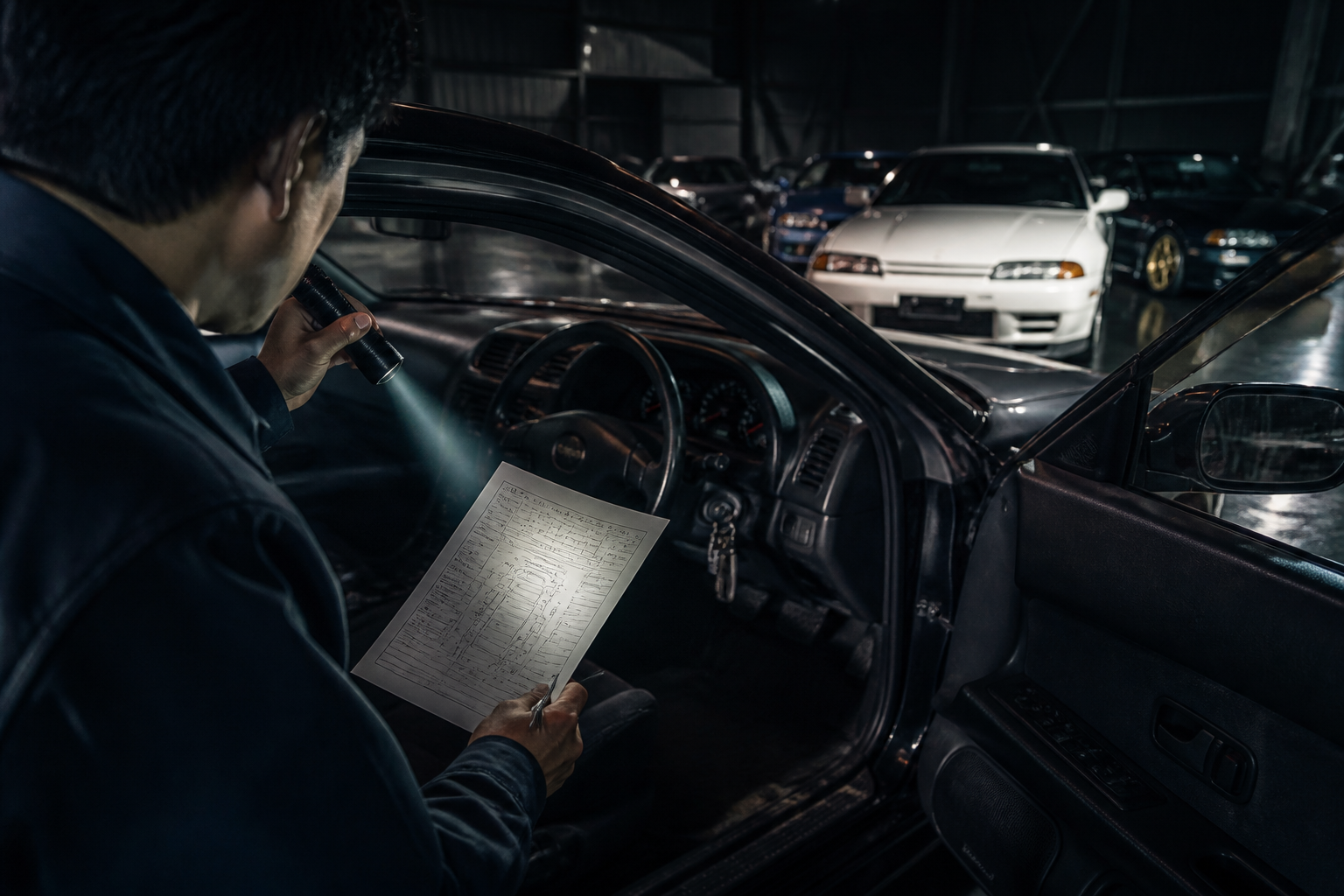
The auction sheet lists the odometer reading and may include notes if the inspector believes the mileage is changed, unknown or inconsistent. Ask for a full translation of the remarks section, not just the grade. Words relating to meter exchange, unclear history or odometer doubt should be treated seriously.
Also compare mileage with the condition grade. A very low-mile car with a worn interior, scratched controls and tired seat bolsters needs explanation. A higher-mile car with honest wear and strong maintenance can be a safer purchase.
Use Shaken and Service Records
Shaken is Japan's periodic roadworthiness inspection, and supporting paperwork can help build a mileage timeline. Service stickers in the engine bay, door shuts or timing-belt covers may show dates and kilometres. Export certificates can also record useful history.
You are looking for progression. If a car shows 62,000 km today, older records should not show 118,000 km unless there is a documented cluster replacement. A single missing document is not proof of fraud, but a broken timeline should affect what you are willing to pay.
Physical Wear Clues
Interior wear can reveal more than a number on a screen. Check the steering wheel, shift knob, pedals, seat bolsters, carpet heel pad, switchgear and door seals. Exterior clues include headlight haze, windscreen pitting, stone chips and worn suspension hardware. None of these prove mileage alone, but together they create a pattern.
Be careful with restored or modified cars. A new steering wheel, bucket seat or resprayed bumper can hide normal wear clues. That is not automatically dishonest, but it means the paperwork needs to do more of the work.
Mechanical Signs
A car advertised as low mileage should feel tight. Excessive suspension clunks, drivetrain lash, smoking turbos, tired synchros or leaking seals should raise questions. Some age-related deterioration happens even at low mileage, especially rubber parts, but the overall condition should still make sense.
For rotary cars, compression testing matters more than odometer reading. For GT-Rs and Supras, modification history can be more important than mileage because hard use at high boost can age parts quickly.
What To Ask Before Bidding
- Is there any auction-sheet note about meter replacement or uncertain mileage?
- Do shaken records or export paperwork support the current reading?
- Are timing-belt stickers present, and do the dates/kilometres make sense?
- Can the importer provide interior, pedal, steering wheel and underside photos?
- Does the wear level match the claimed kilometres?
If the answers are vague, price the car as uncertain. A JDM import does not need ultra-low mileage to be worth buying. It needs a story that makes sense.
About the author
JDM NINJA
JDM NINJA is written and edited by Lucas Tougaard, a Denmark-based importer and owner of Japanese-market performance cars since 2019. Every guide is researched in-house from auction results, factory documentation and hands-on ownership — read how we source and verify our data in our editorial standards, or send a correction.
Published 6/30/2026 · Updated 9/7/2026