Turbo vs Naturally Aspirated: Which JDM Engine Philosophy Wins?
JDM NINJA · 6/30/2026
Nissan and Toyota chased turbocharged power. Honda chased naturally aspirated perfection. Both approaches produced legendary engines — here's an honest look at the case for each.
Two Different Ideas of Performance
Japanese performance cars are often divided into two camps: turbocharged icons such as the Supra, Skyline GT-R, Silvia and Lancer Evolution, and naturally aspirated legends such as the NSX, S2000, Integra Type R and many classic Hondas. Neither philosophy is automatically better. They deliver speed, feel and ownership costs in very different ways.
The right choice depends on what you enjoy and how you plan to use the car. A turbo engine can deliver huge mid-range torque and tuning potential. A naturally aspirated engine usually offers cleaner response, simpler heat management and a more direct connection between throttle and acceleration.
Why Turbo JDM Cars Became Legends
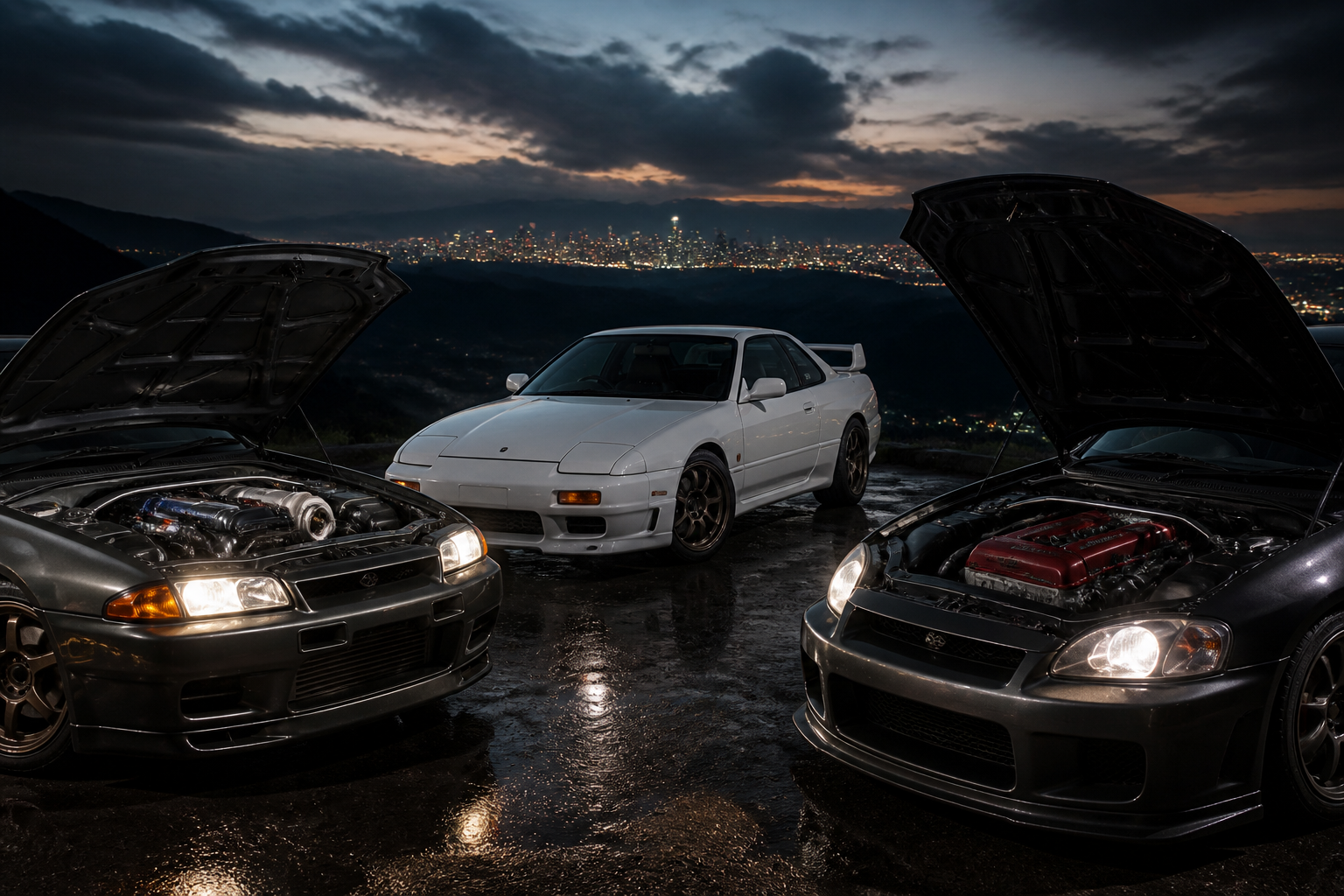
Turbocharging allowed Japanese manufacturers to produce serious power from compact engines. The RB26DETT, 2JZ-GTE, 4G63, SR20DET and EJ-series turbo engines became famous because they responded well to upgrades. Exhaust, boost control, intercooling, fuel system and ECU tuning could transform performance.
The trade-off is complexity. Turbos add heat, oil lines, intercoolers, vacuum plumbing and more failure points. On older cars, rubber hoses, sensors and wiring can be as important as the turbo itself. A modified turbo car is only as good as the person who built and mapped it.
Why Naturally Aspirated Cars Feel Special
Naturally aspirated JDM performance cars often focus on response and revs. Honda's B-series, K-series, F20C and C-series engines are famous because they reward precision. Toyota and Mazda also produced naturally aspirated cars where chassis balance mattered more than boost.
The ownership advantage is usually simplicity. No turbo does not mean no maintenance, but it reduces heat and plumbing. The downside is that large power gains are harder and more expensive. If you want a 500 hp build, a naturally aspirated platform is rarely the budget route.
Driving Feel
Turbo cars often feel faster in normal driving because torque arrives hard in the mid-range. That can be addictive, especially in AWD cars like the GT-R or Evo. Naturally aspirated cars usually require more revs and better gear choice, which can feel more involving on a twisty road.
Lag, boost threshold and throttle response vary hugely by engine and turbo setup. A stock twin-scroll Evo does not feel like a large single-turbo Supra. Likewise, an S2000 does not feel like an NSX. Avoid judging by aspiration alone; judge by the whole car.
Buying Risk
Turbo cars need extra checks: boost pressure, smoke, shaft play, intercooler piping, fuel system, ECU mapping and exhaust quality. Naturally aspirated cars need checks too, especially oil consumption, valve clearances, timing components and gearbox synchros, but there are usually fewer hidden boost-related variables.
If you are buying your first JDM performance car, a clean naturally aspirated model can be easier to learn and maintain. If you have budget for specialist support, a well-built turbo car can deliver performance few NA engines can match.
The Best Choice
Choose turbo if you want torque, tuning headroom and the drama of boost. Choose naturally aspirated if you want response, simplicity and a car that asks you to use the gearbox. The best JDM cars are not great because of one technology; they are great because engine, chassis and purpose match.
About the author
JDM NINJA
JDM NINJA is written and edited by Lucas Tougaard, a Denmark-based importer and owner of Japanese-market performance cars since 2019. Every guide is researched in-house from auction results, factory documentation and hands-on ownership — read how we source and verify our data in our editorial standards, or send a correction.
Published 6/30/2026 · Updated 9/7/2026